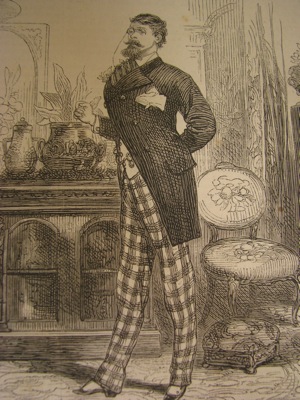


Inspired by the 186th anniversary of Tolstoy's birth on Sept. 9th, this was going to be a post about the many wonderful things about Tolstoy as a writer and thinker, despite his failures as husband and father. But there is too much to say on that, so I focused instead on answering the question I've received many times--why is War and Peace my favorite novel?
Yesterday I had coffee with some nice folks, and one I had just met asked my favorite book. I could feel one of my friends look at me, waiting for an answer she knew all too well after eight years of friendship. I chuckled and said a little awkwardly, "Well, it's War and Peace."
The raised eyebrows and the "wow" were expected, and I did my best to look totally casual and not snotty about saying my favorite book was this grand epic known colloquially as being so long that nobody actually reads it.
Saying War and Peace is my favorite novel has it benefits--it helps me get away with heartily enjoying some really low-brow literature and consuming some of the corniest shows on television. But the downside is that while it may make me look smart, it can make me look a little pompous. I have a terror that I am actually pompous, and so even if it might ruin my excuse for enjoying trashy literature and TV, I insist on telling people that War and Peace is actually this fun romp about people just like you and me, who goof off, have good times, screw up, and live life. As my favorite English professor said, "War and Peace has EVERYTHING, except boats."
I don't remember how or when I first heard of Tolstoy, but I know it was in reference to him being the author of War and Peace, a massive dull novel that seemed to be only invoked as an impossible read. I assumed the book was exactly what the title sounded like, a lengthy treatise on war and peace, until I was fourteen. My sister Melissa was a college freshman, and in typical freshman style, had gotten the wrong edition of the novel, one that didn't include the essay she was supposed to read. Because I liked to poke through her textbooks, I picked the book up and started reading, surprised to find dialogue in the tiny print.
It should come as no surprise that my social life at the time wasn't exactly poppin', if I actually read other people's assigned readings. Large parties made me nervous and I'd already sworn off personal birthday parties because those were even worse (I still think this). Realizing that the novel opened with a party, those most loathsome social events that filled me to the brim with anxiety, I was surprised to find an assortment of characters who were simply trying too hard. They didn't flow with the grace and elegance so common in 19th-century English classics. Princess Bolkonsky is pretty, but her upper lip is "darkened with down" and she has buckteeth that she tries to hide. Pierre Bezukhov is an educated well-traveled bastard son of a great nobleman, "afraid at every moment of missing some intellectual conversation which he might have heard," and "waiting for an opportunity of expressing his own ideas." The gossip passed between the party-goers is vicious and tinged with a knowledge of vulgarity that is only ever implied in Austen or Dickens. It was strikingly real, and as the story shifted to another party, this time a wild drunken one that involves dancing with a chained bear and downing an entire bottle of rum while standing on the sill of an open window, I was enthralled.
The book is that long because it introduces readers to a group of young people that are every bit as relatable as Holden Caulfield and shows them living, growing up, marrying, having kids, and being old. Pierre is awkward and insecure, but just wants to be loved. Natasha is impulsive and dreamy, and thinks everything's going to work out just as she likes it. Andrei is apathetic and depressed, and wallows in self-loathing. Marya is lonely and sheltered, convinced she is stupid and ugly. Nikolai is easily enraptured by cool confidence and readily conforms to whoever he's friends with. Sonya is trusting and loyal, but embarrassingly pathetic. With times of war and of peacetime as the historical backdrop, the characters stumble along, trying to be happy, trying to be popular, and trying oh-so-very hard that it's as painful to watch as if you were living it with them.
Like many Russian novels, depression is depicted vividly, but unlike Dostoevsky, Tolstoy writes with tenderness and without concern of seeming petty. As Andrei ruminates on business and his constant depression while riding in a coach, he sees a group of girls running past him, and notices one "very slender, strangely slender" girl laughing with her hair coming loose.
Romance is not the focus of the novel, but it weaves through it, with love triangles and love quadrilaterals and betrayals and passion and longing. Once again, Tolstoy's readiness to capture the utter silliness of human thoughts without any shame or mockery is seen in his romances. Watching Natasha flit about at a party, Andrei tells himself that if she talks to her cousin next, she will totally be his wife. By chance, she does and Andrei is simultaneously embarrassed and excited. Pierre falls fast for the prettiest and richest girl, and finds that his shallow choice resulted in a shallow wife. Sonya yearns for Nikolai, her cousin, and tells herself she doesn't quite deserve him, but of course he will be hers, because he promised, and will keep his promise even as he leaves her to go out in the world.
Additionally, the book doesn't end with weddings, like an Austen novel, but skips ahead to years later, which is so very satisfying and ultimately what I secretly wish all books would do. There is a picture of married life, the wife and husband talking, thinking how much they love each other, occasionally being annoyed at one another, and gossiping lightly about their relatives. Tolstoy doesn't see a need to either idealize or be a cynic about love and marriage. It's not perfect, but it can be good. The book has a happy ending, but you don't come away feeling like everyone will be happy all the time. The characters grow and most improve, but they're still flawed. One of my favorite lines is Natasha talking to her husband about how wonderful her sister-in-law is and how much of a better person she is than Natasha herself, while expecting him to "prefer her to Marie and all other women, and now...to tell her so anew." It's not a fine thought, it's silly and a bit narcissistic, but Tolstoy includes it and doesn't criticize it.
This all goes to say that I think most people don't realize how genuinely fun the right translation of War and Peace is, because of misconceptions from people who have either never read it or have read some shoddy translations. I don't remember what the translation I originally read was, but I currently have one by Constance Garnett, and I've been enjoying re-reading it. If you have that pretty sky blue copy translated by Pevear and Volokhonsky, please toss it, because it's horrible and leaves the French untranslated, which results in the opening paragraph being entirely in French--a major turn-off for most. When reading foreign books, it is important to know what a difference the translator can make.
I've been going on about the cuteness, because Tolstoy's ability to excel in that is so under-appreciated and unknown, but I also want to convey what an incredibly deep and powerful read it is. Through his wild youth, his middle-aged years as a scholar and family man, and as an elderly philosopher, Tolstoy was fascinated by redemption--not just redemption under God, but the process of self-improvement through repentance or the struggles of obtaining forgiveness from others. He recognizes that some go to their end without redemption, not because it's impossible, but because they refuse it. As a Christian, this is especially moving, because it's much of what we worry about from day to day and read of so often in the Bible. As a human, it's striking to see such a full representation of life, woven over time.
So why is War and Peace my favorite novel of all time? Because it has the beauty and breadth of an ancient epic, but it has all the heartiness and liveliness of a modern novel. It is entirely tangible in its grandeur. It is every bit the novel I want to write.
_________________________________________________________
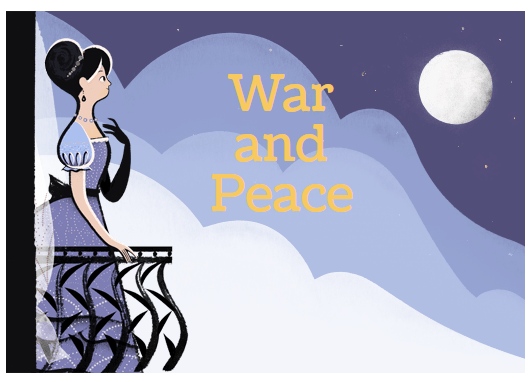 |
| Natasha on the balcony, as envisioned by Google guest doodler, Roman Muradov. For more about the creative process behind Muradov's Tolstoy tribute, read this. (1) |
The raised eyebrows and the "wow" were expected, and I did my best to look totally casual and not snotty about saying my favorite book was this grand epic known colloquially as being so long that nobody actually reads it.
Saying War and Peace is my favorite novel has it benefits--it helps me get away with heartily enjoying some really low-brow literature and consuming some of the corniest shows on television. But the downside is that while it may make me look smart, it can make me look a little pompous. I have a terror that I am actually pompous, and so even if it might ruin my excuse for enjoying trashy literature and TV, I insist on telling people that War and Peace is actually this fun romp about people just like you and me, who goof off, have good times, screw up, and live life. As my favorite English professor said, "War and Peace has EVERYTHING, except boats."
 |
| And I'm totally sure it would have boats, if the nearest ocean wasn't the Arctic. The "war" in the title is the war with Napoleon and the French (which should be a band name), so no arctic voyages are undertaken. :/ (2) |
I don't remember how or when I first heard of Tolstoy, but I know it was in reference to him being the author of War and Peace, a massive dull novel that seemed to be only invoked as an impossible read. I assumed the book was exactly what the title sounded like, a lengthy treatise on war and peace, until I was fourteen. My sister Melissa was a college freshman, and in typical freshman style, had gotten the wrong edition of the novel, one that didn't include the essay she was supposed to read. Because I liked to poke through her textbooks, I picked the book up and started reading, surprised to find dialogue in the tiny print.
It should come as no surprise that my social life at the time wasn't exactly poppin', if I actually read other people's assigned readings. Large parties made me nervous and I'd already sworn off personal birthday parties because those were even worse (I still think this). Realizing that the novel opened with a party, those most loathsome social events that filled me to the brim with anxiety, I was surprised to find an assortment of characters who were simply trying too hard. They didn't flow with the grace and elegance so common in 19th-century English classics. Princess Bolkonsky is pretty, but her upper lip is "darkened with down" and she has buckteeth that she tries to hide. Pierre Bezukhov is an educated well-traveled bastard son of a great nobleman, "afraid at every moment of missing some intellectual conversation which he might have heard," and "waiting for an opportunity of expressing his own ideas." The gossip passed between the party-goers is vicious and tinged with a knowledge of vulgarity that is only ever implied in Austen or Dickens. It was strikingly real, and as the story shifted to another party, this time a wild drunken one that involves dancing with a chained bear and downing an entire bottle of rum while standing on the sill of an open window, I was enthralled.
The book is that long because it introduces readers to a group of young people that are every bit as relatable as Holden Caulfield and shows them living, growing up, marrying, having kids, and being old. Pierre is awkward and insecure, but just wants to be loved. Natasha is impulsive and dreamy, and thinks everything's going to work out just as she likes it. Andrei is apathetic and depressed, and wallows in self-loathing. Marya is lonely and sheltered, convinced she is stupid and ugly. Nikolai is easily enraptured by cool confidence and readily conforms to whoever he's friends with. Sonya is trusting and loyal, but embarrassingly pathetic. With times of war and of peacetime as the historical backdrop, the characters stumble along, trying to be happy, trying to be popular, and trying oh-so-very hard that it's as painful to watch as if you were living it with them.
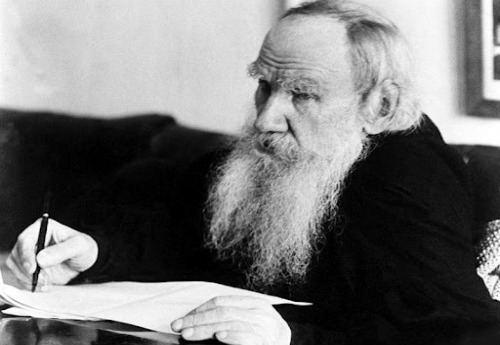 |
| And this guy wrote this by hand. All that. And kept track of the little details. How even??? (3) |
Like many Russian novels, depression is depicted vividly, but unlike Dostoevsky, Tolstoy writes with tenderness and without concern of seeming petty. As Andrei ruminates on business and his constant depression while riding in a coach, he sees a group of girls running past him, and notices one "very slender, strangely slender" girl laughing with her hair coming loose.
"The day was so lovely, the sun so bright, everything around him so gay, and that slim and pretty girl knew nothing of his existence, and cared to know nothing, and was content and happy in her own life--foolish doubtless--but gay and happy and remote from him. What was she so glad about? What was she thinking of? Not of army regulations; not of the organization of the Ryazan rent-paying peasants. 'What is she thinking about, and why is she so happy?' Prince Andrei could not help wondering with interest." (4)
Andrei's wonder continues through the chapter, to the point of silliness, which was relatable to me at fourteen and even now at twenty-four--that feeling of looking through the haze of depression and realizing that somehow, somewhere, someone is happy, and the whole world is not some plot to keep you down. Suddenly, everything seems like signs that he should be happy. The moon is bright late that night and the happy girl is talking about flying into it, and Andrei is filled with "youthful hopes and ideas" and gets so excited he goes to bed so he doesn't have to think. The old tree he associated with the collapse of his whole life is leafy and alive, and he realizes that his life isn't over, and he desperately needs the whole world to know him and be a part of him.
Romance is not the focus of the novel, but it weaves through it, with love triangles and love quadrilaterals and betrayals and passion and longing. Once again, Tolstoy's readiness to capture the utter silliness of human thoughts without any shame or mockery is seen in his romances. Watching Natasha flit about at a party, Andrei tells himself that if she talks to her cousin next, she will totally be his wife. By chance, she does and Andrei is simultaneously embarrassed and excited. Pierre falls fast for the prettiest and richest girl, and finds that his shallow choice resulted in a shallow wife. Sonya yearns for Nikolai, her cousin, and tells herself she doesn't quite deserve him, but of course he will be hers, because he promised, and will keep his promise even as he leaves her to go out in the world.
Additionally, the book doesn't end with weddings, like an Austen novel, but skips ahead to years later, which is so very satisfying and ultimately what I secretly wish all books would do. There is a picture of married life, the wife and husband talking, thinking how much they love each other, occasionally being annoyed at one another, and gossiping lightly about their relatives. Tolstoy doesn't see a need to either idealize or be a cynic about love and marriage. It's not perfect, but it can be good. The book has a happy ending, but you don't come away feeling like everyone will be happy all the time. The characters grow and most improve, but they're still flawed. One of my favorite lines is Natasha talking to her husband about how wonderful her sister-in-law is and how much of a better person she is than Natasha herself, while expecting him to "prefer her to Marie and all other women, and now...to tell her so anew." It's not a fine thought, it's silly and a bit narcissistic, but Tolstoy includes it and doesn't criticize it.
It's little details like that which are so hard to capture on film. I've only ever watched King Vidor's 1956 adaptation of the novel, starring Audrey Hepburn, Mel Ferrer, and Henry Fonda, and that only last year after much hesitation because I was sure that it would be all wrong. I mean, if something as simple to adapt as Harry Potter was a mess on film, how could a novel as complex as War and Peace be decently adapted? I'd just watched Joe Wright's Anna Karenina (2012) and that was an insult to literature, history, and my evening. But I was on an Audrey Hepburn kick, so I gave the film a try.
 |
| Fonda (Pierre), Hepburn (Natasha), Ferrer (Andrei). Costuming is actually fairly accurate, though maybe not quite Russian enough. (5) |
No doubt my expectations were ridiculously low, which probably helped. The movie is utterly beautiful, and surprisingly accurate. The casting was dictated more by star power than suitability, and Henry Fonda, while a great actor, is simply too handsome for the awkward Pierre. Hepburn and Ferrer are both more suited to their roles, and they have excellent chemistry, being that they were a couple in real life at the time. Many supporting characters and minor sub-plots are cut to keep the film at 208 minutes, and the focus is tightened to the three main characters, but watching it I felt something very close to my feelings while reading it for the first time. It was like a beautifully-illustrated abridged book--a wonderful way to experience the story, but only a taste of the real thing. That's about all I hope for in an adaptation, and for those who won't read the book, I'd recommend it, though I'd warn you that with little special effects, the war scenes are far-away and dull, so the ending drags a bit.
There are other versions as well that I haven't yet seen--a 1966/1967 Soviet Russia 7-hour version, which is thought to be the best; a 1972 BBC 15-hour version starring Anthony Hopkins; a 2007 394-minute version starring a cast made up of actors from all over Europe, including Clémence Poésy of France; the upcoming 2015 six-part BBC reboot. There's also a silent one, which I can't find anywhere, but wasn't planning to watch anyway because silent films creep me out to no end.
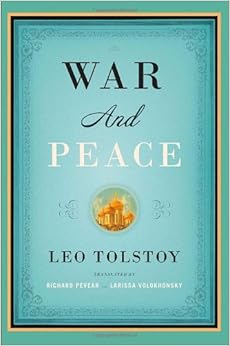 |
| Deceptively pretty design. Stay far away. (5) |
I've been going on about the cuteness, because Tolstoy's ability to excel in that is so under-appreciated and unknown, but I also want to convey what an incredibly deep and powerful read it is. Through his wild youth, his middle-aged years as a scholar and family man, and as an elderly philosopher, Tolstoy was fascinated by redemption--not just redemption under God, but the process of self-improvement through repentance or the struggles of obtaining forgiveness from others. He recognizes that some go to their end without redemption, not because it's impossible, but because they refuse it. As a Christian, this is especially moving, because it's much of what we worry about from day to day and read of so often in the Bible. As a human, it's striking to see such a full representation of life, woven over time.
So why is War and Peace my favorite novel of all time? Because it has the beauty and breadth of an ancient epic, but it has all the heartiness and liveliness of a modern novel. It is entirely tangible in its grandeur. It is every bit the novel I want to write.
_________________________________________________________
Sources
1. "Tolstoy Google Doodle," Sept. 9, 2014. See full tribute here.
2. Map of Russia, 1820. Found image here.
3. Photo - Tolstoy, writing. Found image here.
4. Excerpted from the Constance Garnett translation.
5. On-set photo from War and Peace (1956).
6. Photo of Pevear & Volkohonsky translation from Amazon, which I will not link to.
3. Photo - Tolstoy, writing. Found image here.
4. Excerpted from the Constance Garnett translation.
5. On-set photo from War and Peace (1956).
6. Photo of Pevear & Volkohonsky translation from Amazon, which I will not link to.